
TrustExits vs Flippa (2026): Which Marketplace Nets More for Shopify Sellers?
Etienne Hurpin, Founder of TrustExits · · 14 min read
You are comparing TrustExits and Flippa because you want to know what lands in your account after escrow - not which platform has the loudest marketing. A Shopify brand clearing at $120k can net $104,900 on Flippa self-serve or $110,400 on TrustExits at 8% all-in, before tax and legal. Same headline price. Different fee stack, verification depth, and buyer friction.
I built TrustExits (Luminadeus LLC) for profit-verified ecommerce exits. Flippa is the default marketplace for a reason. This page is a buying decision guide - not keyword spam. Flippa wins plenty of deals. TrustExits wins when margin truth and channel transfer matter. Below: fee math at $50k and $200k, a worked $120k close, where each platform wins honestly, and a verdict by seller type. Competitor tiers change - verify live before you sign.
On this page
- Quick verdict: TrustExits vs Flippa in 60 seconds
- Where Flippa still wins (and should win)
- Where TrustExits wins for Shopify sellers
- Public fee snapshot (verify live before you list)
- Fee math at $50k and $200k closes
- Worked example: $120k Shopify pet brand close
- Verification: revenue badges vs profit verified
- Buyer pool quality and close-rate reality
- Timeline from list to wire
- Escrow and hidden costs not in the headline fee
- When to pick Flippa over TrustExits
- When to pick TrustExits over Flippa
- Verdict by seller type
- FAQ: TrustExits vs Flippa
Quick verdict: TrustExits vs Flippa in 60 seconds
Pick Flippa when you need maximum liquidity fast, your asset is sub-$25k or non-ecommerce (content, apps, domains), and you accept revenue-first verification plus buyer noise.
Pick TrustExits when you sell a profitable Shopify or DTC store, want profit verified (Shopify/Stripe plus ads and COGS reconciled), need Escrow.com inside one seller commission line, and buyers pay $0 so friction stays on the sell side only.
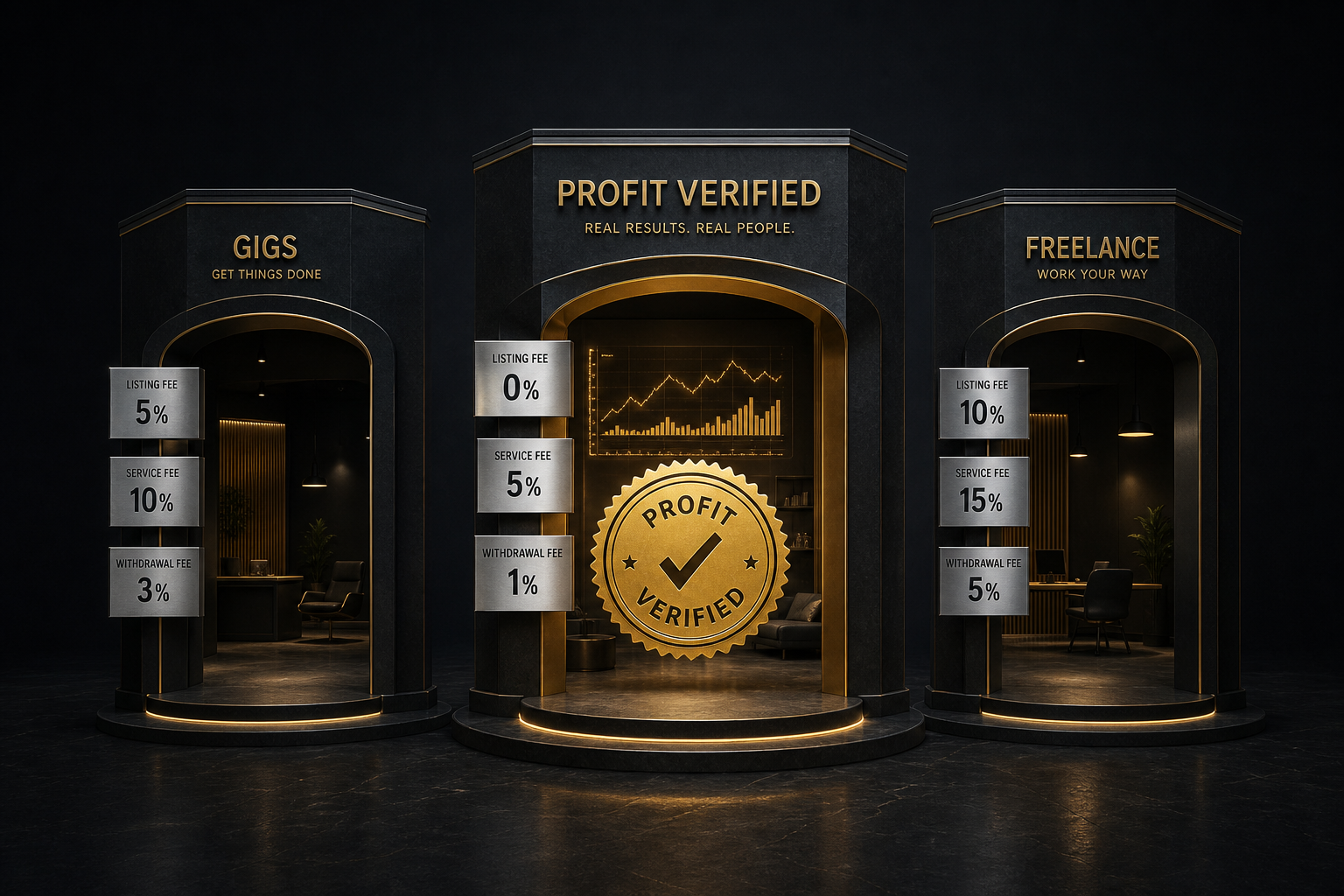
Fee headline: TrustExits charges 8% seller all-in (Escrow.com included, buyers pay $0). Founding sellers in the first 50 listings lock 5% for the life of the listing. Flippa public tiers often land around 8-10% success fee plus listing packages plus escrow - verify live on Flippa before you model net.
Where Flippa still wins (and should win)
Flippa's moat is volume and range. Honest wins:
- Liquidity. More buyers browsing means more inbound on micro-deals. Sub-$15k starter sites and simple affiliate properties often clear here first.
- Self-serve speed. Publish in hours. No vetting queue. No minimum SDE. Useful for price discovery before committing to a curated broker.
- Asset diversity. Apps, domains, newsletters, Amazon FBA, Shopify, SaaS - one search bar. TrustExits is ecommerce-native; Flippa is generalist.
- Low barrier to list. Listing fees plus success fee on close keep entry accessible when you are testing the market.
- Brand recognition. Buyers know Flippa. Some acquirers default-search there before niche marketplaces.
If your store is a small experiment, a content site, or you need eyeballs this week without a dossier prep sprint, Flippa is often the right first stop. Liquidity beats perfection at that price point.
Where TrustExits wins for Shopify sellers
Ecommerce exits die on margin truth and channel transfer - not on whether Stripe shows gross sales.
- Profit verified, not revenue-only. We reconcile Shopify/Stripe revenue with ad spend (Meta, Google) and COGS to TTM SDE. See /methodology for the stack.
- 8% all-in seller commission. Escrow.com fee included. No separate escrow line item on the seller side. Buyers pay $0.
- Ecommerce buyer pool. Acquirers browsing profit-verified store listings, not generic digital assets hunting distressed revenue multiples.
- Channel dependency flags. Meta concentration, GMC health, ad account transfer readiness - disclosed before LOI, not discovered at week six.
- Free estimate before you list. Model your range at /estimate without a listing commitment.
TrustExits is operated by Luminadeus LLC. I am Etienne Hurpin, founder. We are not trying to be Flippa at 10x volume. We are trying to close profitable store exits with fewer retrades.
Public fee snapshot (verify live before you list)
Orientation only. Platforms change tiers. Confirm on each site before you sign.
| Item | TrustExits | Flippa (typical self-serve ecommerce) |
|---|---|---|
| Seller success fee | 8% all-in (5% founding, first 50 listings) | Often ~8-10% sliding by band (verify live) |
| Minimum commission | $800 standard / $500 founding | Varies by tier (verify live) |
| Listing fee | $0 Standard listing | $49+ on many bands; optional upgrade packages |
| Escrow | Included in seller commission | Escrow.com often extra (~1.2%+ split between parties) |
| Buyer platform fee | $0 | $0 platform fee; optional buyer subscriptions |
| Verification | Profit verified (revenue + ads + COGS) | Revenue verification optional; profit not native |
Full four-way comparison: Empire Flippers vs Flippa vs Acquire.com vs TrustExits: Fees Compared. Canonical TrustExits pricing: /fees.
Fee math at $50k and $200k closes
Same hypothetical purchase price. Seller-side costs only. Flippa rows use public 2026 tiers commonly cited - verify live.
$50,000 close
| Platform | Success / commission | Listing / other | Escrow (seller share) | Net to seller |
|---|---|---|---|---|
| Flippa (typical self-serve) | $5,000 (~10% public tier) | ~$49 | ~$600 (if seller pays full escrow) | ~$44,351 |
| TrustExits (8% standard) | $4,000 all-in | $0 | $0 (included) | $46,000 |
| TrustExits (5% founding) | $2,500 all-in | $0 | $0 (included) | $47,500 |
$200,000 close
| Platform | Success / commission | Listing / other | Escrow (seller share) | Net to seller |
|---|---|---|---|---|
| Flippa (typical self-serve) | $20,000 (~10%) | ~$499 | ~$2,400 (if seller pays full escrow) | ~$177,101 |
| TrustExits (8% standard) | $16,000 all-in | $0 | $0 (included) | $184,000 |
| TrustExits (5% founding) | $10,000 all-in | $0 | $0 (included) | $190,000 |
At $50k, TrustExits 8% nets roughly $1,650 more than Flippa self-serve in this table. At $200k, the gap is about $6,900 before tax. Founding 5% widens further. A cheaper headline fee that sits 90 days or retrades at LOI is not cheaper.
Worked example: $120k Shopify pet brand close
Shopify pet accessories brand. TTM revenue $540k. SDE $108k. Clears at $120k after negotiation (1.11x SDE - compressed by Meta concentration). Compare net to seller:
- Flippa self-serve: $120k gross - ~$2k listing/upgrades - $12k success fee (~10%) - ~$1.1k escrow share = ~$104,900 net. Timeline: 95 days list to close, one LOI retrade on hidden Google spend.
- TrustExits (8% all-in): $120k - $9,600 platform fee - $0 escrow line = $110,400 net. Channel flags disclosed upfront; 62 days list to close in this scenario.
- TrustExits (5% founding): $120k - $6,000 = $114,000 net.
Same asset. Same clearing price. $5,500-$9,100 more to seller on TrustExits in this scenario before personal tax. Model yours at /compare with your SDE and ask.
Verification: revenue badges vs profit verified
Flippa can connect Stripe or Shopify for revenue badges. Useful. Not sufficient for ecommerce underwriting.
- Revenue verified: Gross sales confirmed. Margin unknown. Common on open marketplaces.
- Profit verified: Revenue plus COGS and ad spend reconciled to TTM SDE. TrustExits standard.
- Channel verified: Profit plus traffic concentration, GMC health, ad account transfer flags on full dossiers.
Sellers with real margin lose when revenue-only listings sit beside theirs and look equally "verified." Buyers lose when they underwrite revenue multiples on stores that cannot survive ad reconciliation. Deep dive: Revenue vs Profit: Why "Revenue Verified" Is Not Enough.
Buyer pool quality and close-rate reality
Flippa's high listing volume attracts tire-kickers, flippers hunting distressed assets, and serious operators in the same inbox. Filtering cost is real time without a vetting layer on the buy side.
TrustExits filters toward ecommerce acquirers who expect profit-verified dossiers. Fewer raw inquiries. Higher intent per conversation. That tradeoff hurts if you need maximum eyeballs on a sub-$20k asset. It helps if you are at $80k-$400k SDE and tired of LOIs that die when someone finally opens Meta Ads Manager.
Neither platform guarantees a close. Verification depth changes retrade frequency - which is often the hidden fee.
Timeline from list to wire
| Phase | Flippa (typical) | TrustExits (typical) |
|---|---|---|
| Prep to live | Hours to days (self-serve) | Days to 2 weeks (profit verification pass) |
| First serious LOI | 1-4 weeks (varies widely) | 2-5 weeks |
| Diligence to close | 30-90 days (retrade risk higher on unverified margin) | 45-75 days (margin pre-disclosed) |
Flippa wins on speed to publish. TrustExits wins on speed through diligence when books are clean and verified upfront. Process guide: How to Sell Your Shopify Store (Complete 2026 Guide).
Escrow and hidden costs not in the headline fee
Flippa deals often route through Escrow.com with fees split or assigned by deal terms. That line item is easy to miss when comparing "10% vs 8%."
TrustExits absorbs Escrow.com inside the seller commission per /fees. Buyers pay $0 platform fee, which removes one friction point on the buy side.
Other costs both paths share: legal review, asset purchase agreement drafting, personal tax on the sale, and your time in diligence. Model all-in on /compare before you sign anywhere.
When to pick Flippa over TrustExits
- Asset under ~$25k where liquidity matters more than margin proof.
- Non-ecommerce digital asset (content site, app, domain portfolio).
- You need to list this week with zero prep and accept buyer noise.
- Revenue multiple pricing is honest for your business (rare for Shopify, common for content).
- You already have a qualified buyer and Flippa is just the escrow rail.
When to pick TrustExits over Flippa
- Profitable Shopify or DTC store with ad-heavy economics.
- You want profit verified on the listing, not just Stripe gross.
- You want one seller fee line (8% all-in, escrow included) and buyers at $0.
- Channel transfer risk (Meta pixel, GMC, ad accounts) needs disclosure before LOI.
- You qualify for founding 5% (first 50 listings) and want that rate locked for the listing life.
Verdict by seller type
| Seller profile | Recommendation | Why |
|---|---|---|
| Sub-$25k starter / experiment | Flippa | Liquidity and low prep beat verification overhead. |
| $25k-$75k profitable Shopify, clean books | TrustExits (or compare both) | Profit verification and all-in fee often net more after retrade risk. |
| $75k-$300k SDE, Meta-heavy | TrustExits | Channel flags and margin proof reduce LOI death rate. |
| Content / affiliate / non-store asset | Flippa | Generalist buyer pool fits asset type. |
| Already has buyer, needs marketplace escrow | Either | Run fee math on your exact close price; Flippa may be faster to publish. |
Valuation context before you pick a venue: How Much Is My Ecommerce Business Worth? (2026 Guide).
FAQ: TrustExits vs Flippa
Is TrustExits cheaper than Flippa?
On all-in seller net, often yes at $50k+ when you include listing fees and escrow. Flippa can look cheaper on headline success fee alone. Run the tables above with live Flippa tiers for your band.
Does TrustExits charge buyers?
No. Buyers pay $0 platform fee on TrustExits. Sellers pay 8% all-in (5% founding for first 50 listings), Escrow.com included.
Can I list on both at once?
Check exclusivity terms on each platform before you dual-list. Curated brokers often require exclusivity. TrustExits Standard listing has no listing fee; confirm your agreement text before publishing elsewhere.
What does profit verified mean on TrustExits?
Shopify/Stripe revenue reconciled with ad spend and COGS to TTM SDE - not a revenue badge alone. Details at /methodology.
When does Flippa beat TrustExits on net proceeds?
Micro-deals where listing fee delta matters less than speed, non-ecommerce assets, or when you already have a buyer and minimize platform services. Rare for mid-size profitable Shopify exits once escrow and retrades are included.
What fees should I budget besides success fees?
Legal review, tax advice, and your diligence time. On Flippa, add listing packages and escrow. On TrustExits, escrow is inside the 8% line per /fees.
Ready to model your exit? Compare TrustExits side by side with the stack you are already considering.
Related reading & next steps
Keep going with the cluster - or jump straight into a TrustExits tool.
- Flippa Alternatives in 2026 (Honest Comparison)
- Empire Flippers vs Flippa vs Acquire.com vs TrustExits: Fees Compared
- How Much Is My Ecommerce Business Worth? (2026 Guide)
- Revenue vs Profit: Why "Revenue Verified" Is Not Enough
- How to Sell Your Shopify Store (Complete 2026 Guide)
TrustExits pages worth opening
Ready for numbers, not screenshots?
Run a free estimate or see how we verify profit before a listing goes live.