
Flippa Alternatives in 2026 (Honest Comparison)
Etienne Hurpin, Founder of TrustExits · · 13 min read
Flippa listed thousands of digital assets in 2025. If you run a Shopify brand doing $45k/month in revenue with $6,200 in net profit after ads and COGS, that headline volume matters less than whether the platform can prove margin and transfer ad accounts before a buyer sends an LOI.
This is not a hit piece. Flippa is the default marketplace for a reason. But "Flippa alternative" searches spike when sellers get burned: revenue verified on Stripe, profit never reconciled, buyer walks at LOI, or a stacked success fee lands on a deal that took four months. I built TrustExits because ecommerce exits need a different verification layer. Flippa still wins plenty of deals. Here is an honest map of where it fits, where it does not, and what to compare before you list.
On this page
- Where Flippa still wins
- Where Flippa fails ecommerce sellers
- Revenue verified vs profit verified
- Fee comparison at $50k and $200k exits
- Worked example: net proceeds on a $120k close
- Flippa alternatives worth considering in 2026
- Verification depth compared by platform
- Buyer pool quality and close rates
- When TrustExits is the right fit - and when it is not
- Five mistakes when picking a marketplace
- Decision matrix: pick your exit venue in 10 minutes
- Timeline from list to close by venue type
- How TrustExits fits the alternatives landscape
Where Flippa still wins
Flippa's moat is liquidity and range. You can list a $2k starter site, a $500k SaaS, or a content portfolio in the same week. For sellers who need eyeballs fast and can tolerate noise, that matters.
- Volume. More buyers browsing means more inbound, even if conversion quality varies. Micro-deals under $25k often clear here.
- Self-serve speed. Publish in hours. No vetting queue. No minimum SDE. Good for price discovery before a broker retainer.
- Asset diversity. Apps, domains, newsletters, Amazon FBA, Shopify - one search bar.
- Escrow integration. Escrow.com on many deals. Real infrastructure for sub-$100k transfers.
- Low barrier to list. Listing fees plus success fee on close - accessible at entry.
If your store is a small content site, a simple affiliate property, or a sub-$15k experiment you want to flip quickly, Flippa is often the right first stop. Liquidity beats perfection at that price point.
Where Flippa fails ecommerce sellers
Ecommerce is not a generic digital asset. A store doing $100k/month in Shopify revenue can net $8k or lose money depending on Meta CAC, Google Shopping feed health, and return rates. Flippa's verification stack was built for revenue-first assets. Stores need profit truth and channel risk audit.
Revenue verified is not profit verified
Flippa can connect Stripe or Shopify for revenue badges. Useful. Not sufficient. Buyers still ask for ad account exports, COGS spreadsheets, and refund reconciliation because the badge does not subtract ad spend or product cost.
No native channel dependency audit
Most Shopify exits I see are 60-85% paid acquisition. Fine if ROAS is stable and ad accounts transfer cleanly. A discount - or a dead deal - if one Meta pixel, one Google Merchant Center suspension, or one banned policy flag sits under the hood.
Buyer quality variance
High listing volume attracts tire-kickers, flippers hunting distressed assets, and serious operators in the same inbox. Filtering cost is real time without a vetting layer on the buy side.
Stacked fees on seller pain
Flippa's public ~10% success fee plus listing packages plus Escrow.com charges add up. Full side-by-side math in Empire Flippers vs Flippa vs Acquire.com vs TrustExits: Fees Compared and on /fees.
Revenue verified vs profit verified
Marketplace trust language migrated from SaaS, where gross margin is 75%+ and revenue approximates profit. Ecommerce breaks that assumption. Three tiers worth naming honestly:
- Tier 1 - Revenue verified: Stripe or Shopify confirms gross sales. Margin unknown. Common on open marketplaces.
- Tier 2 - Profit verified: Revenue plus COGS and ad spend reconciled to TTM SDE. Rare on generalist platforms.
- Tier 3 - Profit plus channel verified: Tier 2 plus traffic concentration, GMC health, and ad account transfer flags. TrustExits standard for full dossiers.
Sellers with real margin lose when Tier 1 listings sit beside theirs and look equally "verified." Buyers lose when they underwrite revenue multiples on stores that cannot survive ad reconciliation.
See our profit verification methodology for what each tier requires in practice. Start valuation from profit, not vanity revenue - see how much your ecommerce business is worth.
Fee comparison at $50k and $200k exits
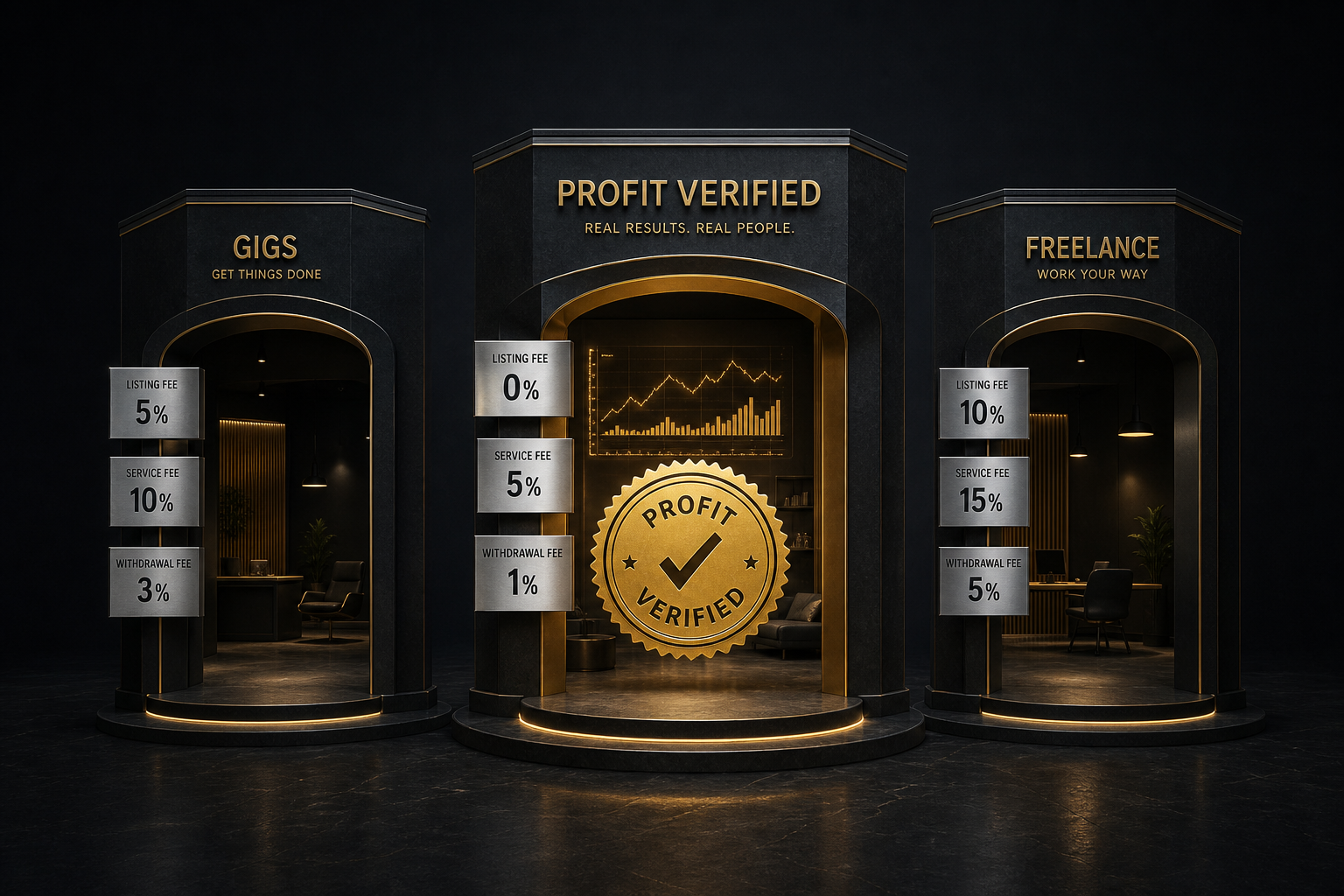
When people search "Flippa alternative," they usually mean lower fees or better buyers. Compare net to seller on the same hypothetical exit using public 2026 tiers - verify live before you sign. TrustExits numbers from published pricing: 8% seller all-in, Escrow.com included, buyers pay $0 (5% founding for first 50 listings).
$50,000 exit (seller-side costs)
| Platform | Success / commission | Listing / other | Escrow (seller share) | Net to seller |
|---|---|---|---|---|
| Flippa (typical self-serve) | $5,000 (~10% public tier) | ~$49 | ~$600 (if seller pays full escrow) | ~$44,351 |
| Empire Flippers | $10,000 (~15%, $10k min often applies - verify live) | $0 | $0 (typically bundled) | $40,000 |
| Acquire.com | Often N/A for typical Shopify at $50k | - | - | - |
| TrustExits (8% standard) | $4,000 all-in | $0 Standard listing | $0 (included) | $46,000 |
| TrustExits (5% founding) | $2,500 all-in | $0 | $0 (included) | $47,500 |
$200,000 exit (seller-side costs)
| Platform | Success / commission | Listing / other | Escrow (seller share) | Net to seller |
|---|---|---|---|---|
| Flippa (typical self-serve) | $20,000 (~10%) | ~$499 | ~$2,400 (if seller pays full escrow) | ~$177,101 |
| Empire Flippers | $30,000 (~15% public tier) | $0 | $0 (typically bundled) | $170,000 |
| Acquire.com (if qualified SaaS-like) | ~$12,000 (~6% - verify live) | ~$0-$1,200/yr listing (prorated) | $0 (often bundled) | ~$186,800-$188,000 |
| TrustExits (8% standard) | $16,000 all-in | $0 | $0 (included) | $184,000 |
| TrustExits (5% founding) | $10,000 all-in | $0 | $0 (included) | $190,000 |
Full assumptions and hidden costs in the full fee comparison article. The point: an 8% all-in fee with verified profit that closes beats a "cheaper" listing that sits 90 days or retrades at LOI.
Worked example: net proceeds on a $120k close
Shopify pet accessories brand. TTM revenue $540k. SDE $108k. Clears at $120k after negotiation (1.11x SDE - compressed by Meta concentration). Compare net to seller across venues using public 2026 tiers:
- Flippa self-serve: $120k gross - ~$2k listing/upgrades - $12k success fee (~10%) - ~$1.1k escrow share = ~$104,900 net. Timeline: 95 days list to close, one LOI retrade on hidden Google spend.
- Empire Flippers curated: $120k - $18k commission (~15%) - ~$1.1k escrow if split = ~$100,900 net. Fewer tire-kickers, vetting queue first.
- TrustExits (8% all-in): $120k - $9,600 platform fee - $0 escrow line (included) = $110,400 net. Channel flags disclosed upfront; 62 days list to close, zero material retrade in this scenario.
- TrustExits (5% founding): $120k - $6,000 = $114,000 net.
Same asset. Same clearing price. Your math will differ. Model yours on /compare with your SDE and ask.
Flippa alternatives worth considering in 2026
Empire Flippers
Best when: you want human vetting, can wait in queue, and your asset fits their mix (Amazon, content, SaaS, some ecommerce). Real verification work relative to open marketplaces. Tradeoff: exclusivity, timeline, and public ~15% commission stack on many deals.
Acquire.com
Best when: you are SaaS or tech-adjacent with clean metrics Acquire buyers understand. Ecommerce sellers often find buyer mismatch - acquirers want MRR and retention curves, not SKU-level COGS drift.
FE International, Quiet Light, Website Closers
Best when: deal size justifies a broker retainer ($500k+ for some shops). Ask explicitly: do you reconcile ad spend to net profit, or stop at revenue?
Private sale + Escrow.com
Best when: you already have a buyer. Lowest platform fee, highest fraud risk if diligence is weak. Use milestone escrow. Our how it works page outlines the transfer sequence we supervise on-platform.
TrustExits
Best when: you are selling a profit-generating Shopify or ecommerce brand and want the listing to show what buyers actually underwrite - net profit after ads and COGS, plus channel concentration flags. One 8% seller fee all-in. Buyers pay $0. Not trying to list every digital asset on earth - intentional.
Verification depth compared by platform
| Platform | Revenue | Ad accounts | COGS reconcile | Channel flags |
|---|---|---|---|---|
| Flippa self-serve | Often | Rare at list | Rare | No |
| Empire Flippers | Yes | Often in vetting | Partial | Varies |
| Acquire.com | Yes | SaaS-focused | N/A for most | Limited |
| TrustExits | Yes | Yes | Yes | Yes |
Depth affects time-to-close more than headline fee. A buyer who trusts the dossier on day one skips the retrade that kills Flippa deals at LOI stage.
Buyer pool quality and close rates
Rough patterns from ecommerce exits in the $75k-$300k band in 2026:
- Flippa: High inquiry volume, low inquiry-to-call conversion for revenue-only listings, retrades common when profit was not pre-reconciled.
- Curated brokers: Lower volume, higher call-to-LOI when vetted, longer queue to publish.
- TrustExits: Smaller pool, ecommerce-native operators, higher LOI-to-close when profit-verified dossier is live.
Liquidity is not the same as close rate. A hundred casual inquiries on a revenue-only listing often convert worse than twelve qualified operators who already trust the margin story.
When TrustExits is the right fit - and when it is not
Good fit:
- Shopify or DTC store with verifiable profit (not just Stripe revenue)
- Material paid acquisition - you need a buyer who understands Google/Meta transfer risk
- You want read-only verification instead of PDF theater
- Ask price roughly $50k-$2M where diligence depth affects close rate
- 30-60 days preparing books before list
Bad fit:
- Sub-$10k starter site you need gone in a week - use Flippa liquidity
- Pure content or affiliate with no COGS complexity
- SaaS with ARR narrative - Acquire.com or a SaaS broker is a better room
- You refuse read-only access to ad accounts
- You want an auction with 200 casual bids
Our verification standard is documented on /methodology.
Five mistakes when picking a marketplace
Mistake 1: Comparing headline success fees only. A 10% fee on a deal that never closes nets zero. Model all-in proceeds and probability of close. Use the $50k and $200k tables above.
Mistake 2: Listing on revenue when profit cannot survive diligence. Fix books first or pick a venue where honest SDE is the narrative.
Mistake 3: Dual-listing with different ask prices. Buyers talk. Inconsistent numbers kill credibility.
Mistake 4: Ignoring channel transfer risk in venue choice. Open marketplaces will not flag Meta BM ownership issues. You discover them at LOI anyway.
Mistake 5: Choosing liquidity over buyer fit for a $200k+ store. At scale, qualified operator pools beat raw bid count.
Decision matrix: pick your exit venue in 10 minutes
- Write net profit (trailing twelve months, owner-adjusted). If you cannot, stop and fix books. Start with /estimate.
- Score channel risk (0-10): single ad account? GMC warnings? 90% Meta? Higher score means practitioner audit, not a revenue badge.
- Set timeline: need close in 30 days - broker or existing buyer. Can wait 60-120 days for better price - curated marketplace.
- Model net proceeds on /fees at your target price. Cross-check full fee comparison.
- Match buyer pool: ecommerce operator vs SaaS roll-up vs flipper - pick the room where your metric language is native.
Flippa remains the broadest bazaar. For ecommerce stores where margin and ad accounts are the product, alternatives that verify profit and flag channel risk convert better - even when headline fees look similar.
Timeline from list to close by venue type
Realistic ranges for a clean Shopify store with $80k-$150k SDE in 2026:
- Flippa self-serve: 0-3 days to publish, 60-120 days to LOI, 30-45 days diligence and escrow. Add 30-60 days if profit was not pre-reconciled.
- Curated broker (Empire Flippers et al.): 14-28 days vetting queue, 45-90 days to LOI, 30-45 days close.
- TrustExits profit-verified: 7-14 days dossier build, 30-60 days to LOI, 21-35 days close when channel flags were disclosed upfront.
- Private sale: 0 days to "list" if buyer exists, 14-30 days diligence, 14-21 days escrow - fastest when both sides are prepared.
Prep weeks 1-2 (reconcile SDE, fix COGS gaps) compress every timeline above. Skipping prep adds calendar time regardless of platform.
How TrustExits fits the alternatives landscape
We are not anti-Flippa. We are anti-vanity metrics for a category that does not have SaaS economics. TrustExits sits where liquidity meets proof: profit-verified dossiers, channel audit flags, 8% seller all-in with escrow included, and buyers who pay $0.
Revenue verified is table stakes. Profit verified plus channel disclosure is what keeps LOIs from dying in week two when someone opens Google Ads for the first time.
Compare TrustExits side by side with the fee and verification stack you are already considering - then list where your numbers survive first contact with a serious buyer.
FAQ
Is Flippa still worth it for Shopify stores in 2026?
Yes, for certain bands - especially sub-$25k listings where speed and volume beat verification depth. Above $75k with heavy paid acquisition, sellers often net more after diligence on a curated or profit-verified venue because buyer trust is higher and retrades are lower.
What is the best Flippa alternative for ecommerce specifically?
Depends on deal size and proof quality. Empire Flippers for broker-led vetting at scale. TrustExits if you want ecommerce-native profit verification at 8% all-in. Private sale if you already have a buyer and strong escrow milestones.
How do Flippa fees compare at $50k and $200k?
See the tables above and full fee comparison. Flippa often wins on paper at $50k self-serve; TrustExits 8% all-in with escrow included often nets more when retrades and stacked fees are counted.
Can I list on Flippa and TrustExits at the same time?
Check exclusivity terms before dual-listing. Even when allowed, inconsistent ask prices and verification levels confuse buyers. Better: one primary venue, one data room, one narrative.
What fees should I budget besides success fees?
Listing fees, Escrow.com (unless bundled - TrustExits includes it), legal review, and your time in diligence. Model all-in on /compare before you sign a listing agreement anywhere.
Still weighing venues? Compare TrustExits side by side with the stack you are already considering.
Related reading & next steps
Keep going with the cluster - or jump straight into a TrustExits tool.
- How Much Is My Ecommerce Business Worth? (2026 Guide)
- Revenue vs Profit: Why "Revenue Verified" Is Not Enough
- How to Sell Your Shopify Store (Complete 2026 Guide)
- Ecommerce Due Diligence Checklist (15 Things to Verify)
TrustExits pages worth opening
Ready for numbers, not screenshots?
Run a free estimate or see how we verify profit before a listing goes live.